Amazon's Alexa Text-to-Shop Feature Is Live, for Some, While Rival Agents Stay Locked Out
Amazon's new Alexa text-to-shop feature is rolling out by invitation only, with full access promised to millions of US customers in the coming weeks. It arrives weeks after Amazon blocked Meta's Muse agent from checking out on Amazon.com, and amid an unresolved court fight over whether Amazon can block rival shopping agents at all.

Status
- Announced
- Demonstrated
- Available
- Independently confirmed
Sources
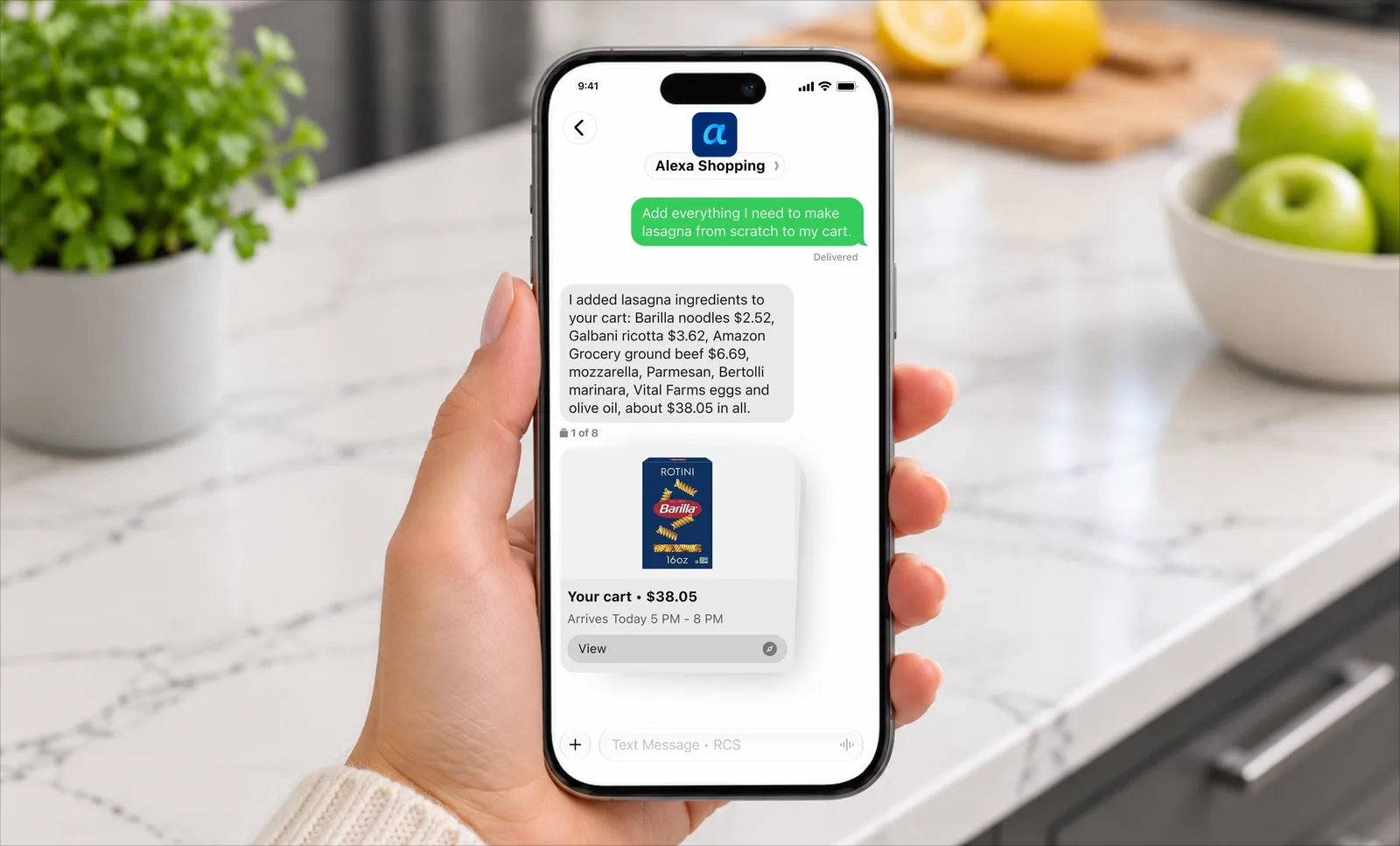
Amazon's text-to-shop feature for Alexa is rolling out by invitation only. The company's own newsroom post, titled "Text, shop, done: Alexa for Shopping is now just a text away," describes a staged release: a limited group of US customers gets access first, and Amazon says millions more will follow in the coming weeks. Customers who want in have to opt in and link a phone number before any SMS exchange with Alexa works.
The mechanics are narrow by design. A customer can text Alexa to search for a product, compare options, build a cart, request a price-drop or delivery alert, or manage a shopping list. When it comes time to pay, Alexa asks for explicit approval before the purchase goes through, according to Amazon's announcement. That approval step is the whole feature, functionally: nothing completes without a reply back from the customer.
This launch sits on top of an existing base. Alexa for Shopping is the May 2026 rename of what had been Rufus, and on Amazon's Q3 earnings call on October 29, CEO Andy Jassy told investors that more than 400 million customers had used it in the past twelve months, up from 350 million in July, with interactions up 570 percent year over year. Amazon also says US users of Alexa for Shopping spend 50 percent more per order than non-users, a correlation the company reports without explaining how it isolated the effect.
Jassy's framing on that call matters for what the text feature is actually competing against. He described rival shopping agents, including Meta's Muse, as "still not great" and said Amazon intends for Alexa for Shopping to be customers' primary shopping agent on its own site. Amazon had blocked Muse from checking out on Amazon.com on September 20, after roughly twelve days of access, telling Muse users in a popup that "continued access by an unauthorized AI agent violates Amazon's Conditions of Use." Amazon cited Muse's handling of account credentials and its lack of disclosure that it is an AI agent while browsing.
The legal footing behind that kind of block is less settled than Amazon's Conditions of Use notice implies. A federal judge granted Amazon a preliminary injunction against Perplexity's Comet agent on March 10, on a CFAA theory that Amazon, not just the user, has to authorize an agent's access. The Ninth Circuit vacated that injunction on August 4, ruling that the district court had abused its discretion and that it is the user, not Perplexity, accessing Amazon's systems. Amazon sought en banc rehearing on August 18, and the underlying suit is still pending at the district court.
Meta, for its part, hasn't dropped Muse's Amazon ambitions. It struck a deal with Shopify so Muse can check out through Shop Pay instead of going through Amazon's own checkout flow, a route that sidesteps the block rather than contesting it in court.
For now, the gap between Amazon's own agent and everyone else's is a matter of access, not capability. Alexa for Shopping runs inside Amazon's Conditions of Use because Amazon wrote them. Muse and Comet have to run around them, through a legal appeal in one case and a Shop Pay workaround in the other. The text-to-shop rollout adds one more credential to that asymmetry: a phone number linked to an Amazon account, and an invitation that, for now, most customers still don't have.
Keep reading
-
 Granola Ships Dictation for Mac, Leaves iOS and Windows as Promises
-
 Almost All of Amazon's New Echo Lineup Is Already Shipping. One Piece Isn't.
-
 iOS 27.2 Brings Apple Pencil Support to the iPhone Duo, Plus a Video Call Light Trick
-
 Apple's New App Store Badge for the iPhone Duo Is a Software Label, Not a Hardware Certification