Amazon Sets Ship Dates for Ring's First Mobile Security Cameras
Amazon says its first mobile Ring devices, the Rover Cam robot and Drone Cam flying camera, ship in late 2026 and early 2027, using an AI Pilot system to map homes and patrol rooms autonomously.

Status
- Announced
- Demonstrated
- Available
- Independently confirmed
Sources
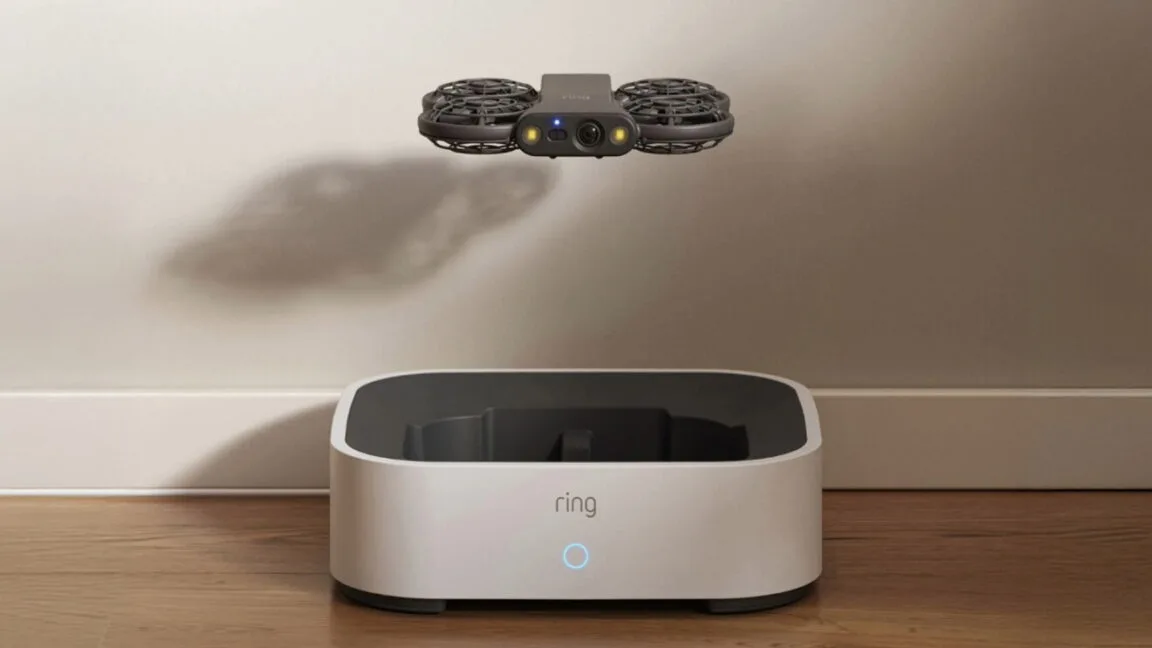
Amazon has set a release window for two new Ring hardware lines that move cameras off the wall and onto wheels or rotors. The Ring Rover Cam, a ground robot, is due at the end of 2026. The Ring Drone Cam, a flying unit meant for indoor use, follows in early 2027. Amazon posted the announcement on November 10, and neither device has a confirmed price or preorder date yet.
Both products run on what Amazon calls an AI Pilot system. It combines each device's cameras with what the company describes as specialized vision models, on-device sensors and cloud processing to plan patrol routes and steer around furniture. That description comes from Amazon's own announcement, so the claims about obstacle handling are the manufacturer's, not yet verified by independent testing or reviewers who have used the hardware.
Setup for both devices starts with mapping the home or office. For the Drone Cam, a customer walks the unit through each room by hand before it flies on its own. For the Rover Cam, the robot does some of that exploration itself. Amazon has not said how long mapping takes, how it handles multi-story layouts, or what happens when a room's layout changes after the initial scan, details that matter once the devices leave a demo floor and enter an actual living room.
This is not Amazon's first attempt at an airborne home camera. The company's earlier indoor drone, Ring Always Home Cam, was announced in 2020 and shipped to a limited pool of invited customers starting in 2021 before quietly fading from Amazon's lineup. That history gives the new Drone Cam a predecessor with a real shipping and support record to compare against, rather than a clean slate.
A roaming, camera-equipped robot inside a home raises a different privacy question than a fixed doorbell camera. A stationary camera watches a doorway. A mobile one can be sent, or send itself, through every room, bathroom included, and can accumulate a floor-plan map of the space it patrols. Ring has faced scrutiny before over how footage from its devices is stored, shared and, in some cases, handed to law enforcement, and that record means the new products will be judged against existing policy, not a hypothetical one.
Amazon has not yet published technical specifications such as battery life, charging method, flight or drive time per session, or how footage is stored and encrypted for either device. Those are the details that typically separate a hardware promise from what a buyer actually receives, and they're not in the November 10 announcement. Until Amazon or outside reviewers publish that information, the Rover Cam and Drone Cam remain products with a release window and a feature description, not yet products with a track record.