Apple's Ambient Listening Privacy Claim Is Really a Hardware Claim
Apple's new Siri Audio Intelligence features process raw audio inside the S11 chip's Secure Exclave, keeping it off-limits to apps, iOS, and Apple itself.

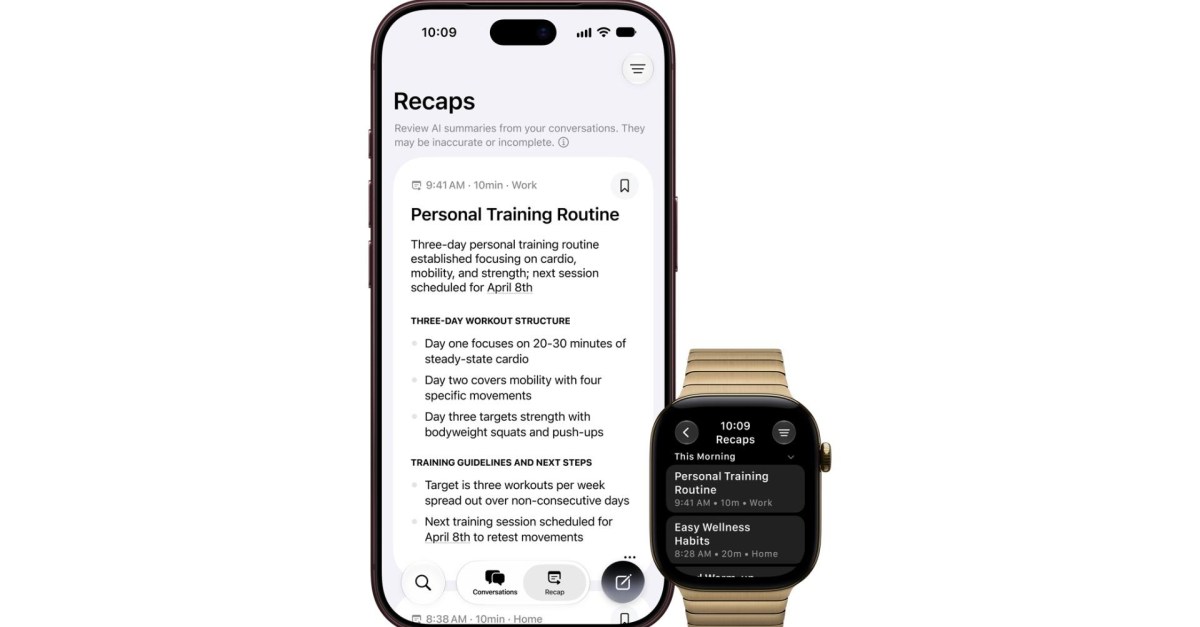
Apple used Wednesday's iPhone Duo event to introduce Siri AI Audio Intelligence, a set of features that listen continuously for cues in a room: Siri Recap, Live Rewind, Sound Recognition, and Music Recognition. Rather than leave the privacy tradeoffs to a keynote slide, Apple published a technical document spelling out where that audio actually goes, and the answer is narrower than "the cloud" or even "the phone's main processor."
According to Apple's paper, raw audio captured for these features is handled inside dedicated hardware, is not saved as a file, and is not accessible to the operating system, third-party apps, or Apple itself. The processing runs on the Secure Exclave inside the S11 chip, the same silicon that powers the new Apple Watch Series 12 and Apple Watch Ultra 4. That detail is the load-bearing one for anyone deciding whether to trust the feature: this is not a software promise layered on general-purpose hardware, it is a claim about a physically isolated enclave that Apple says the rest of the system cannot query.
That architecture also draws the boundary on what ships now versus what's aspirational. Audio Intelligence depends on silicon that only exists in the newest Watch models and whatever iPhone Duo hardware pairs with them, so the feature is gated by device generation rather than an iOS or watchOS version number alone. Users on older Apple Watch hardware, without an S11-class chip, will not get Live Rewind or Sound Recognition no matter what software update lands, since the privacy guarantee Apple is making is specifically tied to that Secure Exclave, not to an app or a permissions toggle.
The document frames this as a deliberate response to what "ambient listening" implies: a device that is always processing sound to recap conversations or flag noises like a doorbell or crying baby has to justify why that is not a standing wiretap. Apple's answer is to keep the audio pipeline out of reach of the OS and apps by design, rather than relying on policy language about how data will be used once collected. Whether that holds up depends on independent verification of the Secure Exclave's isolation, something Apple's document asserts but does not, on its own, prove to outside researchers.
For now, the practical takeaway is narrower than the keynote demo suggested: Siri Recap and its companion features are a hardware-gated capability tied to the S11 chip, not a universal Siri upgrade, and the privacy claims rest entirely on that enclave doing what Apple says it does.
Keep reading
-
 Apple's New App Store Badge for the iPhone Duo Is a Software Label, Not a Hardware Certification
 -
 Nirva's $249 Pendant Promises to Listen Only to You. It Hasn't Shipped Yet.
 -
 Claude Duet Arrives as a Research Preview, Not a Finished Agent
 -
 Nvidia's RTX Spark Laptops Are Fast at Local AI, If You Buy the Right Configuration