announcement-check
Google Puts Four TPUs on a Rocket to See if Space Is a Real Datacenter Site
Project Suncatcher's first satellite launches October 1 with four Trillium TPUs, testing whether solar powered orbital compute can survive launch loads, radiation and vacuum cooling.
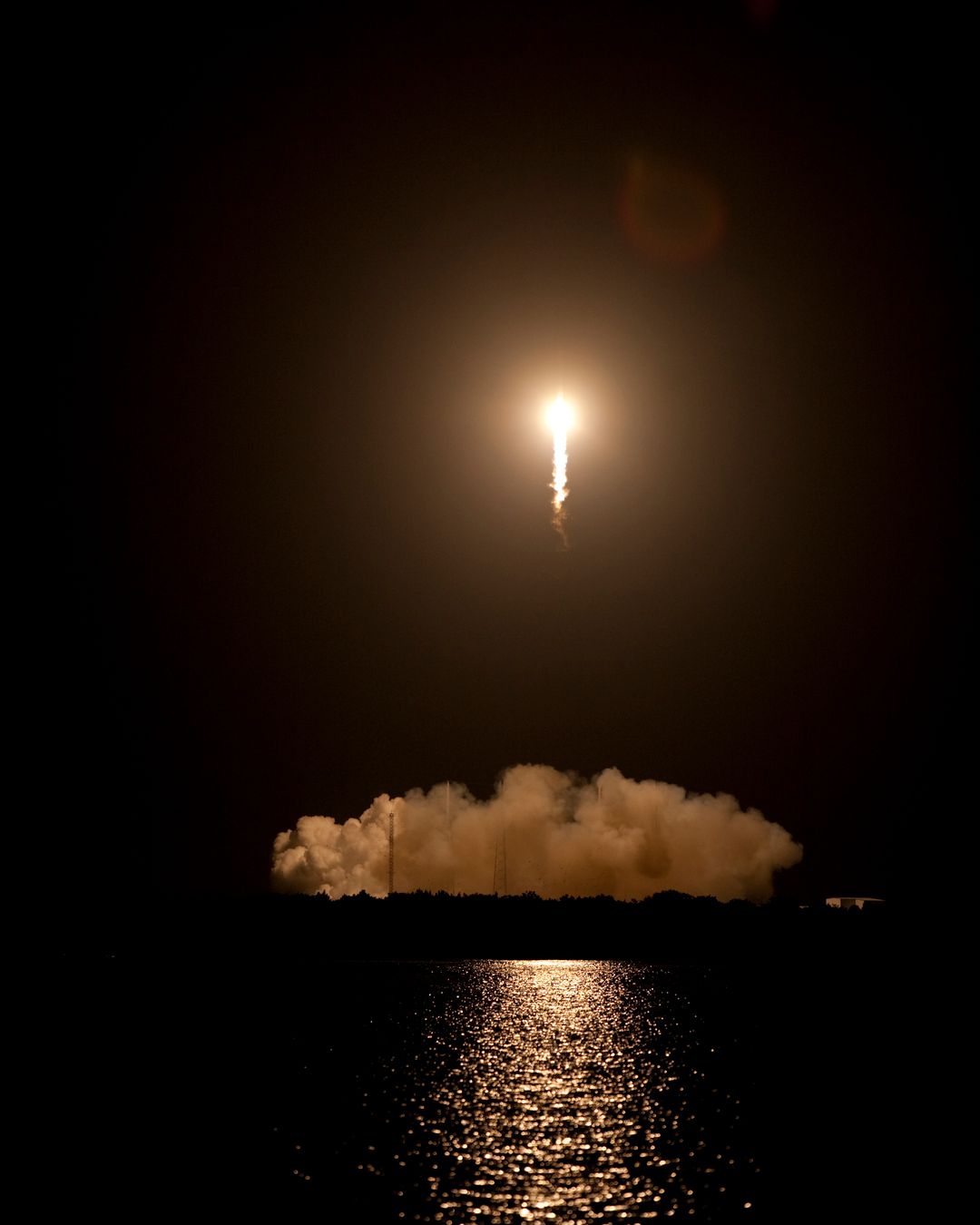
Google is set to launch its first Project Suncatcher satellite on a SpaceX Falcon 9 from Vandenberg Space Force Base on October 1, carrying four of the company's custom Trillium TPU accelerators into low Earth orbit, according to The Register. The fridge sized craft, internally called MVP for Minimum Viable Product, was built with Planet, the Earth imaging company known for its fleet of small satellites, according to Tech Insider.
This is a hardware qualification run before anything else. Google has already fired its Trillium chips with a proton beam at UC Davis's Crocker Nuclear Laboratory while the chips ran AI workloads, watching for bit flips and other radiation induced errors, per officechai. The ascent itself is brutal on silicon: a rocket ride to orbit lasts roughly ten minutes but subjects the payload to sustained loads up to 10g, stress that ground based datacenter components are never built to absorb.
Once in orbit, the thermal problem gets harder, not easier. Space is a vacuum, so the heat that TPUs throw off during compute has no air to move into. Convective cooling is impossible, and any thermal management has to rely on radiative methods alone, according to Yahoo Tech. SiliconANGLE reports that Google's own engineers acknowledge the cooling system on this prototype will not keep pace with a full production workload, meaning the near term goal is measurement, not throughput.
Travis Beals, a senior Google engineer on the project, framed the mission plainly: 'This first launch is about seeing what works, identifying points of failure and applying those findings to future missions,' as quoted by SiliconANGLE. Google says the next phase, planned for 2027, will put two satellites in orbit together to test the high bandwidth laser links that any real orbital cluster would depend on for chip to chip communication, a detail confirmed in Google's own project post on blog.google.
The economics behind this are the real constraint. Google's own research estimates that launch costs need to fall to around $200 per kilogram before space based compute becomes commercially viable, a figure cited by TheNextWeb. The scale problem compounds that: matching a single 1 gigawatt terrestrial datacenter would require something like 10,000 satellites, according to estimates reported by the-decoder. Google's longer term architecture envisions clusters of 81 satellites flying in formation within a one kilometer radius at roughly 650 kilometers altitude, a configuration meant to approximate the density of a ground cluster while drawing on unfiltered solar power, per Yahoo Tech's reporting.
None of this is happening in isolation. Google announced Suncatcher in November 2025 partly in response to Elon Musk's own proposals for space based data centers under SpaceX, which made orbital AI infrastructure a centerpiece of its IPO prospectus earlier this year, as noted by both SiliconANGLE and Gizmodo. Nvidia backed startup Starcloud got there first in a narrow sense, having already launched a single H100 chip into orbit last November and used it for on orbit workloads, according to TheNextWeb and Yahoo Tech.
Analysts quoted across the coverage are consistent on timeline: this remains years from commercial viability given launch costs, satellite production bottlenecks, and unresolved engineering questions around cooling and radiation hardening, per Yahoo Tech's sourcing. Google's own framing of success is correspondingly modest. As one Google executive put it to Inc., 'if we're really successful with this in the long run, this will ultimately be boring and people won't think anything at the fact that their Gemini queries” are being served from orbit, a bar the four Trillium chips riding a Falcon 9 next week are simply trying to clear by surviving the trip.