Google's orbital AI satellite writes a haiku, and a very expensive one
Google's orbital TPU prototype, Suncatcher, beamed down a Gemma 4-generated haiku, a near-free bit of inference riding on a satellite that costs millions to launch and faces real radiation limits.

Status
- Announced
- Demonstrated
- Available
- Independently confirmed
Sources
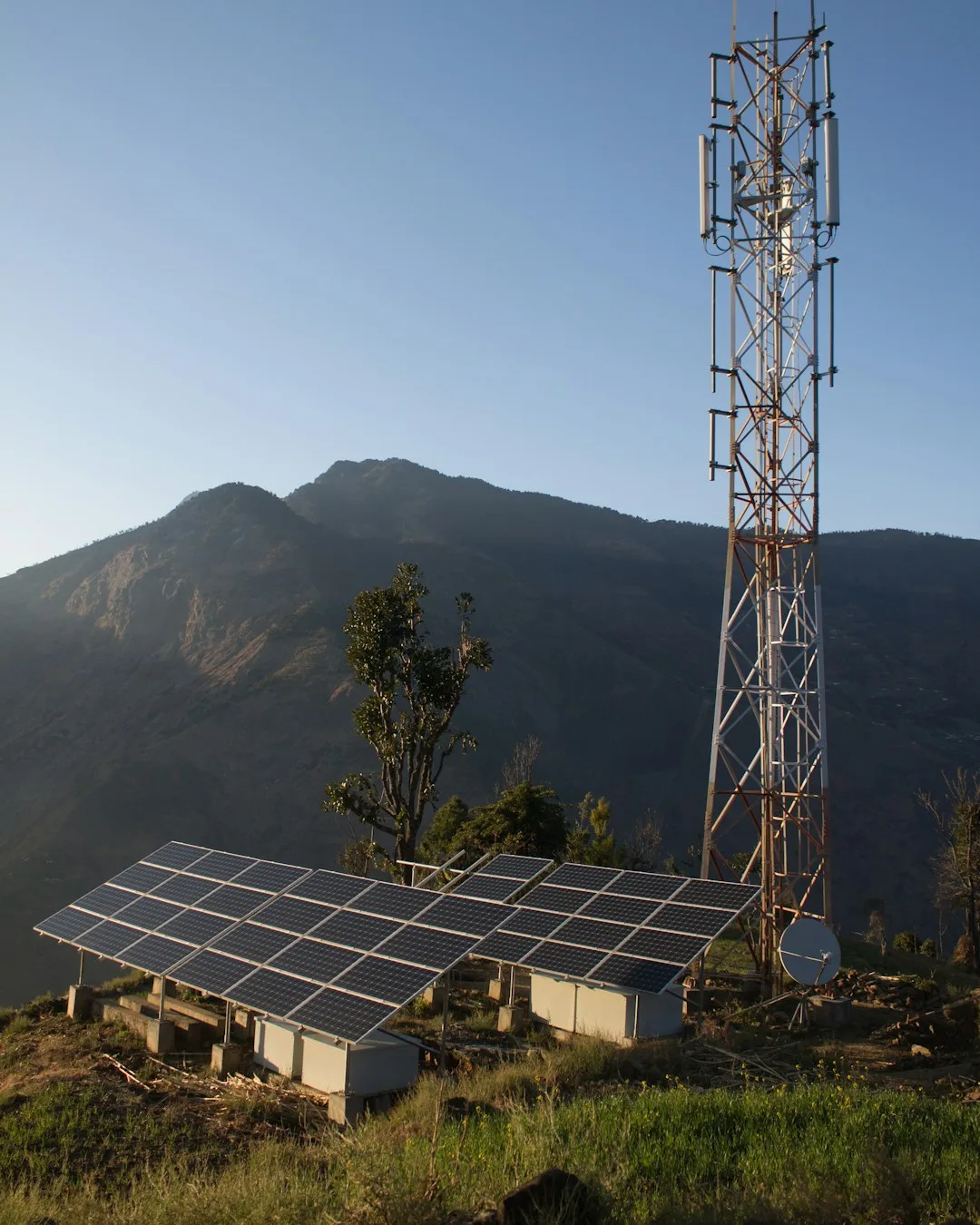
Google's first experimental orbital AI datacenter satellite has done its first real work: writing a poem. The company's Suncatcher satellite, launched at the start of October and placed in low Earth orbit, received a prompt from a ground station asking it to "write a haiku from the perspective of a TPU orbiting Earth, with the wonderful world spinning beneath you." It answered.
Travis Beals, senior director of Google's Paradigms of Intelligence research team, described the moment as a "Hello World" milestone for the project. "During a ground-station pass, we uplinked our first prompt to our onboard Gemma 4 open model, asking it to generate a haiku about being in space," he wrote in a company blog post. As the satellite passed over Svalbard, Norway, the onboard model sent its response over the downlink: "Blue marble below, / Data streams in silent grace, / Starlight feeds my core."
The inference itself cost almost nothing. Twenty tokens of output from Gemma 4 26B run through Google Cloud's API price list, $0.60 per million output tokens, work out to about $0.000012. The satellite that produced it is a different story. A spacecraft built to Starlink's roughly 500 kg class, launched at a retail price near $7,000 per kg, turns a fraction-of-a-cent haiku into a multimillion-dollar one.
That gap is the entire point of the exercise. Google's own calculations lay out the economics it needs to close before orbital datacenters make financial sense: if launch costs fall to $200 per kg, the amortized launch cost over a satellite's working life, an estimated $810 to $7,500 per kilowatt per year, would land in the same range as what US terrestrial datacenters already pay for electricity, about $570 to $3,000 per kilowatt per year. Google expects SpaceX to reach that $200/kg figure by 2035, and says it wants hardware proven out well before that date arrives.
Beals said the team followed the haiku with space-themed limericks and prompts that report the payload's own technical status, then moved on to the harder question: how the hardware holds up once it is actually in space. Google has run its Trillium Cloud TPU and an AMD host server through a 67 MeV proton beam in the lab to find out.
The chip's high-bandwidth memory turned out to be the weak point. It showed irregularities after a cumulative dose of 2 krad(Si), about three times Google's minimum requirement of 750 rad(Si) for surviving total ionizing dose. For transformer workloads specifically, researchers measured one silent data corruption event per 17 rad. At an estimated orbital dose of 150 rad(Si) per year and one inference per second, that works out to a failure probability of about one in every 3 million inferences, according to a Google paper published earlier this month.
The paper's authors called that rate acceptable for inference workloads. They flagged a separate open question: what the same radiation exposure does to training jobs, which run far longer and accumulate errors differently than a single forward pass. That question, along with the efficacy of system-level mitigations, requires further study, the researchers wrote.
Next year's test pushes the project a step further: two satellites communicating with each other in orbit rather than one working alone. Google says the long-term plan isn't to loft a handful of large satellites into space. It's to build a constellation of many smaller ones that talk to one another, splitting compute the way a terrestrial datacenter splits work across racks.
Keep reading
-
 Can AI data centers be mass-produced like cars? This startup aims to find out
-
 Altman-backed Volantis bets $88 million that lasers, not copper, will break AI's memory wall
-
 Nvidia's Cheaper DGX Spark Costs More Than the Machine It Replaced
-
 Crusoe Drops Boom Supersonic's Turbines From Its AI Power Plan