announcement-check
Tesla's Cybercab Finally Leaves the Stage for Austin Streets
Tesla's steering-wheel-free Cybercab is now carrying paying riders in Austin, putting Elon Musk's camera-only, no-lidar approach to a real public test after two years of demos.
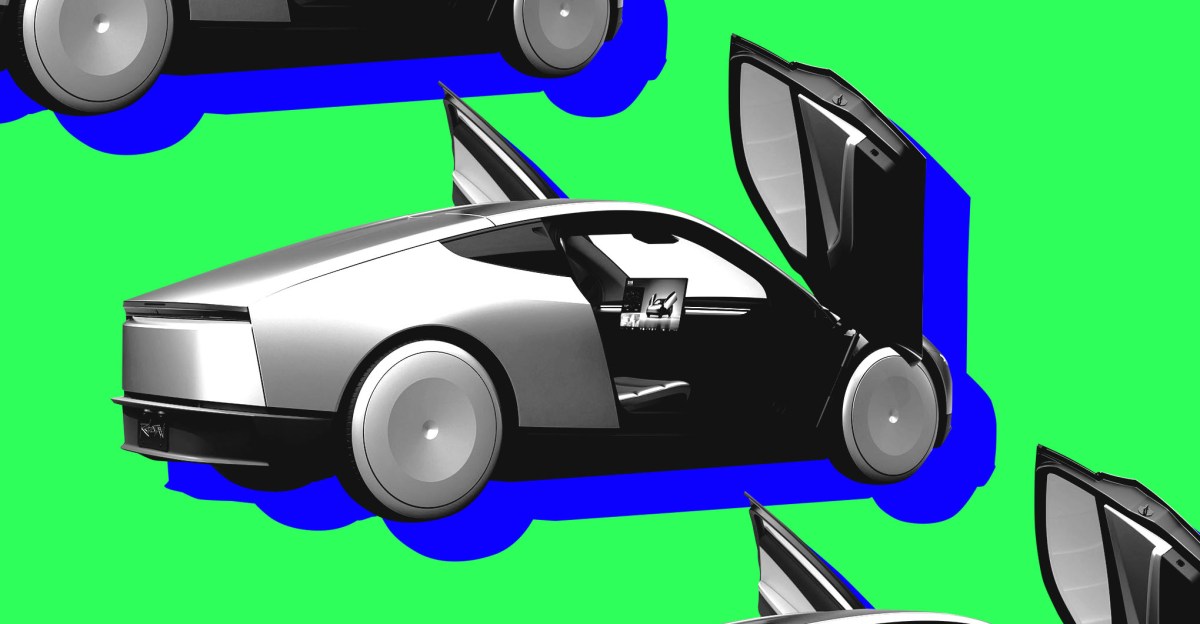
Nearly two years after Elon Musk pulled the sheet off a gold-tinted, gull-wing two-seater with no steering wheel, the Tesla Cybercab is actually carrying paying riders. The vehicle has entered service as part of Tesla's robotaxi operation in Austin, Texas, according to The Verge, marking the first time the purpose-built robotaxi has moved from stage prop to working product.
The gap between those two states is the story. Tesla unveiled the Cybercab in October 2023 as a vision of what autonomy could look like once steering wheels and pedals became unnecessary. What's rolling through Austin now is a real deployment with real access conditions: a defined service area, safety monitors either in the vehicle or watching remotely, and a small initial fleet rather than the citywide coverage Musk has promised for years.
The central bet under all of it is sensor philosophy. Every other serious robotaxi operator, Waymo chief among them, builds its self-driving stack on lidar and radar layered under cameras, treating redundant sensing as the baseline cost of removing a human driver. Musk has gone the other way, wagering Tesla's autonomy program, and by extension a pay package tied to the company's valuation, on a camera-only system that reads the road the way a human eye does and skips the extra hardware entirely.
That wager is now being tested in live traffic rather than in keynote footage. A camera-only system has to infer depth and distance from two-dimensional images, a harder computational problem than reading a lidar point cloud directly, and it loses fidelity in exactly the conditions, glare, heavy rain, and darkness, where a laser or radar return would still hold up. Tesla has leaned on the argument that if human drivers can navigate on vision alone, a sufficiently trained neural network should too, but Austin's rides are the first chance to see that argument play out with paying strangers in the back seat instead of Tesla engineers.
The company has also kept its own guardrails in place during this early phase, running with in-car safety monitors and geofenced routes rather than handing full control to riders from day one. That caution says something about where the system actually is: capable enough to operate in public, not yet trusted enough to run without a human backstop. It's the same pattern Waymo and Cruise went through in their own early rollouts, though Cruise's ended after one of its robotaxis dragged a pedestrian in San Francisco and the company lost its permit to operate there.
Whether Tesla's approach holds up will show in the incident reports and disengagement logs that accumulate as the Austin fleet grows, not in another stage demo. For now, the Cybercab has crossed the line from unveiled concept to vehicle carrying fares on public streets, and Musk's camera-only bet is finally running on the same roads as everyone else's lidar.