Amazon's Bee Finally Ships Hardware, But the Memory and Consent Questions Still Aren't Answered
Amazon's Bee has finally shipped its first post-acquisition hardware, the $74.99 Frontier wearable, while the pricier Eclipse stays "coming soon" and its Pro subscription terms remain murky.

Status
- Announced
- Demonstrated
- Available
- Independently confirmed
Sources
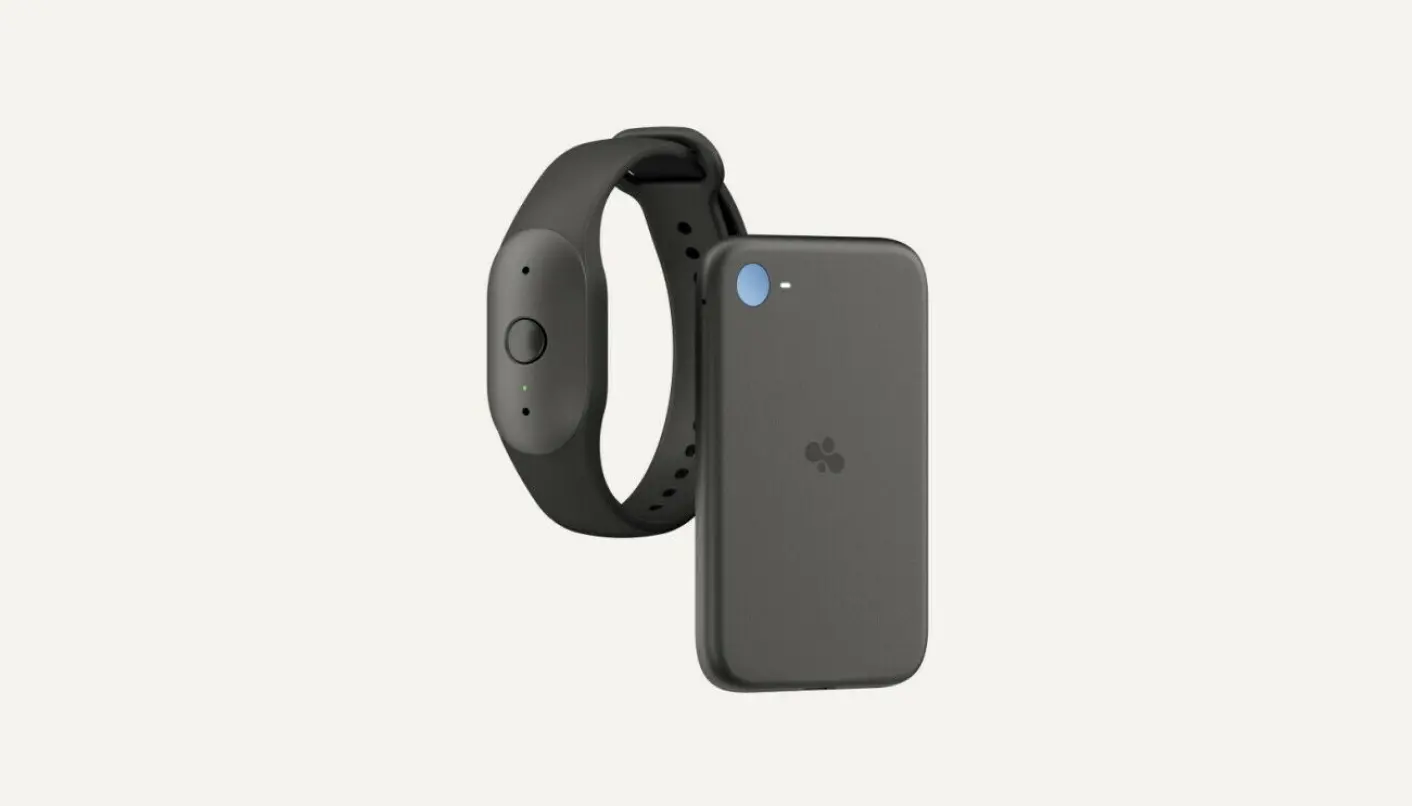
Amazon's wearable-AI subsidiary Bee shipped its first hardware since being acquired by the retail giant last year, and the lineup says a lot about where ambient-recording gadgets actually stand in late 2026: one product you can buy today, one you can only pre-order, and a subscription tier whose exact terms are still unsettled even at launch.
Bee Frontier, a $74.99 wrist or clip-on recorder, is shipping now. Bee Eclipse, a $99.99 magnetic attachment that clips to a phone, is listed as "coming soon," meaning the company is taking orders for a device it has not finished building. That gap between announced and available matters more than usual here, because Bee's entire pitch rests on always-on capture working reliably in the field, not on a stage demo. Amazon's co-founder and CEO of Bee, Maria de Lourdes Zollo, announced the acquisition on LinkedIn in July 2025, and it took Amazon Devices, run by Panos Panay, more than a year to put new hardware on shelves.
The free tier caps stored memory at 14 days, which quietly limits what "it remembers everything" can mean for anyone not paying. A new $11.99-a-month "Bee Pro" plan removes that cap and adds unlimited summaries, third-party integrations, suggested to-dos, a desktop app, and a more capable assistant layer. Coverage of the launch has not settled whether Alexa+ features ride on top of Bee Pro or require a separate paid layer, which is the kind of access-condition detail that should be nailed down in Amazon's own product pages before anyone recommends the upgrade.
Panay told TechCrunch's Disrupt conference that the devices "listen to your whole day," a line that drops any pretense of selective capture. Amazon's stated safeguards are a visible LED that lights up while the device is listening, and transcripts encrypted with keys generated and held on the device rather than in Amazon's cloud. Those are company claims about shipped behavior, not findings from an independent audit, and the distinction matters given Amazon's own history: the 2019 reporting that human reviewers listened to Alexa recordings is still the reference point critics reach for whenever Amazon asks people to trust a new always-listening product.
The legal terrain underneath all of this remains as unresolved as it was when Bee first launched its $49.99 Pioneer device. More than ten U.S. states, including California, Illinois, Washington, and Massachusetts, require all parties to consent before a conversation is recorded, and that body of law was written for someone deliberately recording one specific conversation, not for a wrist-worn device capturing an entire day of ambient speech from anyone who walks into range. Legal analysis published by Mondaq on AI note-taking tools describes this as largely untested territory, since neither statutes nor case law anticipated continuous passive capture.
Bee's answer, unchanged since before the acquisition, is that audio is processed in real time and discarded immediately, with no raw recording retained, and that the device prompts for consent when it detects a new voice. None of that has been independently verified, and the stakes rise once that pipeline sits inside Amazon's advertising and shopping infrastructure. The Register's framing of Bee as something that can serve up "personalized shopping recommendations based on that conversation you just had" is the commercial logic that turns a memory aid into a data-collection product, and it is also the part of the system least visible to the person wearing it.
Bee is not the only ambient-recording startup to end up inside a platform company's org chart. Meta acquired Limitless, the startup formerly known as Rewind, in December 2025, just months after Amazon absorbed Bee and days after Meta hired Apple design veteran Alan Dye. Unlike Amazon, Meta did not keep building the hardware. Limitless halted pendant sales to new customers, moved existing subscribers to a free plan, and is winding the device down over roughly a year, with some users in the UK and South Korea already reporting dead units, according to reporting picked up by BetaNews. Two of the three best-known always-listening wearable startups were swallowed by platform owners within about five months of each other, and only one of them chose to keep shipping hardware.
The pattern echoes Microsoft's Recall, the Windows feature that stores periodic screenshots of a user's activity so Copilot can search them later. Security researchers tore into Recall's 2024 preview over locally stored, largely unencrypted screenshots sitting in plain view of anyone with access to the machine, forcing Microsoft to rebuild it around opt-in enrollment, Windows Hello gating, and encrypted storage before shipping a revised version. The Register's headline pun, "Bee-lieve wearable AI can recall it all," lands closer to that history than to anything resembling an actual product recall. Each attempt at normalizing persistent personal recording, whether worn on a wrist or running on a laptop, has hit the same wall of researchers and regulators asking what happens to the data once it leaves the device, and each time the industry's response has been the same promise: better encryption, a visible light, a redesigned toggle.
One competitor has taken a different approach to the same problem. Plaud, maker of a lapel-pin recorder, builds in an audible chime it calls Consent Mode, so anyone nearby hears when recording starts, a feature Bee and the now-shrinking Limitless both lack. It is a small design choice, and it is also the clearest marker of how differently companies are still answering the question Bee's launch reopens: whether a device that remembers everything can also tell the people around it that it is doing so.