Want to build a UK datacenter? Please hold while Whitehall transfers you
A minister told MPs datacenter rules are clear, but builders still need sign-off from four departments, and Microsoft already walked from a UK supercomputer over power access.

Status
- Announced
- Demonstrated
- Available
- Independently confirmed
Sources
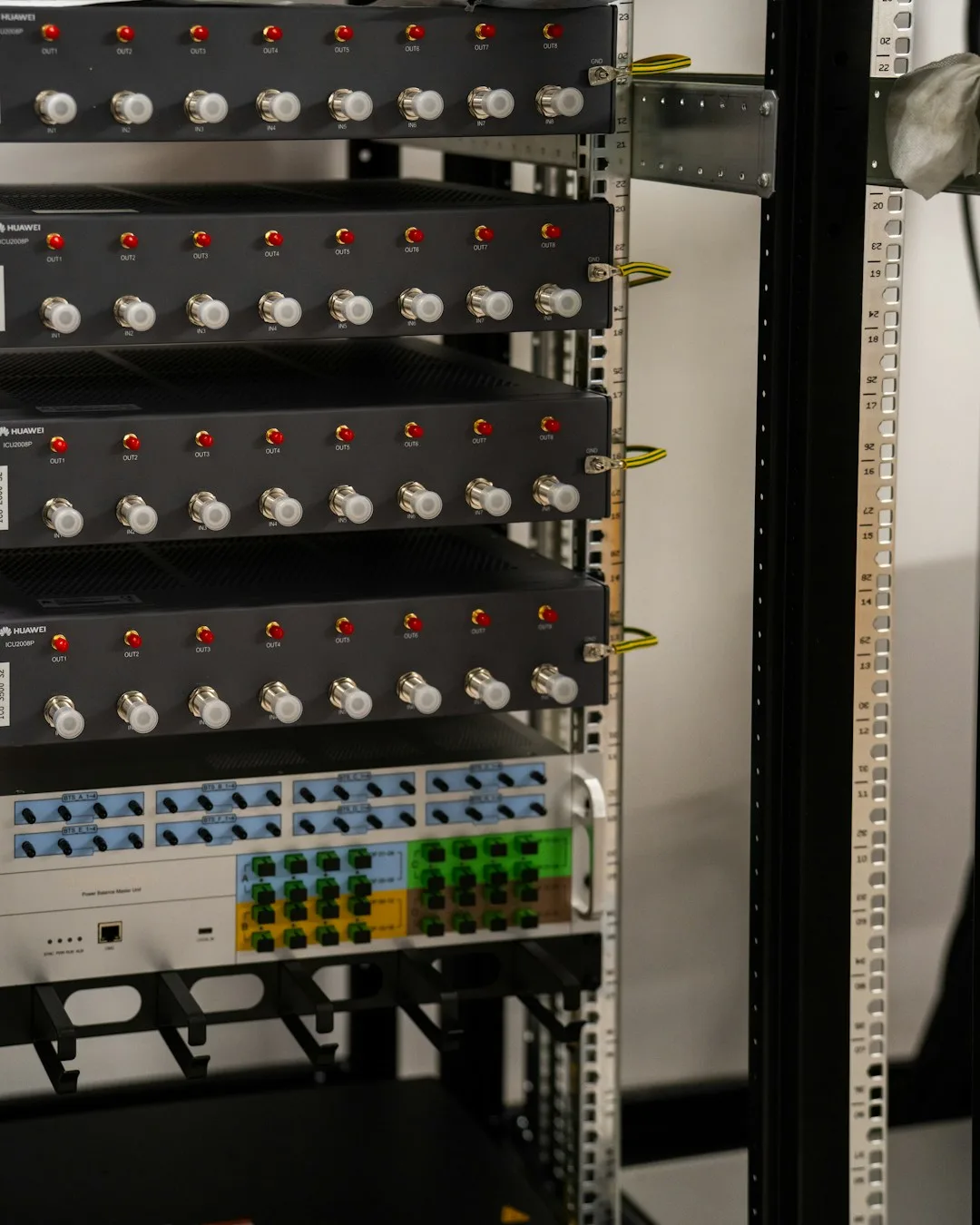
Build a datacenter in the UK and three government departments will each claim a piece of the approval chain. One handles datacenter policy. A second handles telecoms. A third handles energy. A fourth, strictly speaking, handles planning. None of this consolidated after Prime Minister Andy Burnham's summer reshuffle scrapped the Department for Science, Innovation and Technology.
The House of Commons Science and Technology Committee pressed junior minister Liz Lloyd this week on where responsibility for datacenter construction now sits. Lloyd holds a joint portfolio across the Department for Business, Innovation, Science and Trade and the Department for Digital, Culture, Media and Sport. She told MPs that liaison with the tech industry on datacenter construction moved to BIST once DSIT was dissolved, while digital infrastructure policy, including telecoms, stayed with DCMS.
"In terms of sector responsibilities, that is clear that technology, sorry, that telecom sits with DCMS and datacenters with BIST. When you're actually in an industry or you're trying to run a business, that that that is clear," Lloyd said, according to The Register.
That division covers only two of the approvals a datacenter operator needs. Power supply falls to the Department for Energy and Net Zero, a department Lloyd did not mention and that sits outside her joint BIST-DCMS brief entirely. Planning permission for the physical build rests with local councils, and the national planning policy that constrains those councils belongs to the Ministry of Housing, Communities and Local Government. An operator assembling a UK site has to clear BIST, DCMS, DESNZ and MHCLG, plus whichever local authority holds the site, before construction and connection are both settled.
The gap between departmental org charts and grid capacity already has a casualty. Microsoft withdrew plans earlier this month for what would have been Britain's largest AI supercomputer after it couldn't secure enough power for the facility. The company's decision turned on a connection date and a capacity allocation, not on planning consent or industry liaison, the two functions Lloyd's testimony addressed directly.
The committee also revisited a figure from outside Lloyd's current brief. In January 2025, under the previous Starmer government, the Cabinet Office published a release headlined "Archaic tech sees public sector miss £45 billion annual savings," arguing that the NHS and local councils were forfeiting that sum each year by running on outdated systems, and pledging to close the gap with "digital tools, AI and common sense."
Asked by the committee whether the government still stands behind the £45 billion figure, Lloyd said it was never meant as a line item. "The £45 billion figure was an estimate of long-term productivity gains. It wasn't a kind of one-off figure for savings. It was never a figure that was a target or a cashable savings figure," she said. The 2025 release had framed the number as savings being actively missed each year. Lloyd's answer recasts it as a projection with no fixed timetable and no single department accountable for delivering it, the same pattern that leaves datacenter builders checking four departments instead of one.
Keep reading
-
 Pennsylvania's new AI ad law reaches from Super Bowl spots to wing-special flyers
-
 Google's October 16th Privacy Policy Change Opens Gmail and Photos Data to Ad Targeting
-
 Nvidia's OpenShell Pitch Leans on Hardware Lock-in and a Telemetry Opt-Out, Not New Rules
-
 FCA to extend incident reporting rules to AI near-misses, ahead of Parliament's own plan