USDA Organic Cosmetics: Certified Ingredients, Product Labeling
PURE'AM BLEMISH THIRST RESCUE SERUM anchors this guide to reading USDA organic cosmetics labels. Certified ingredients identify named raw materials, while product labeling establishes the scope of an organic claim for the finished formula.

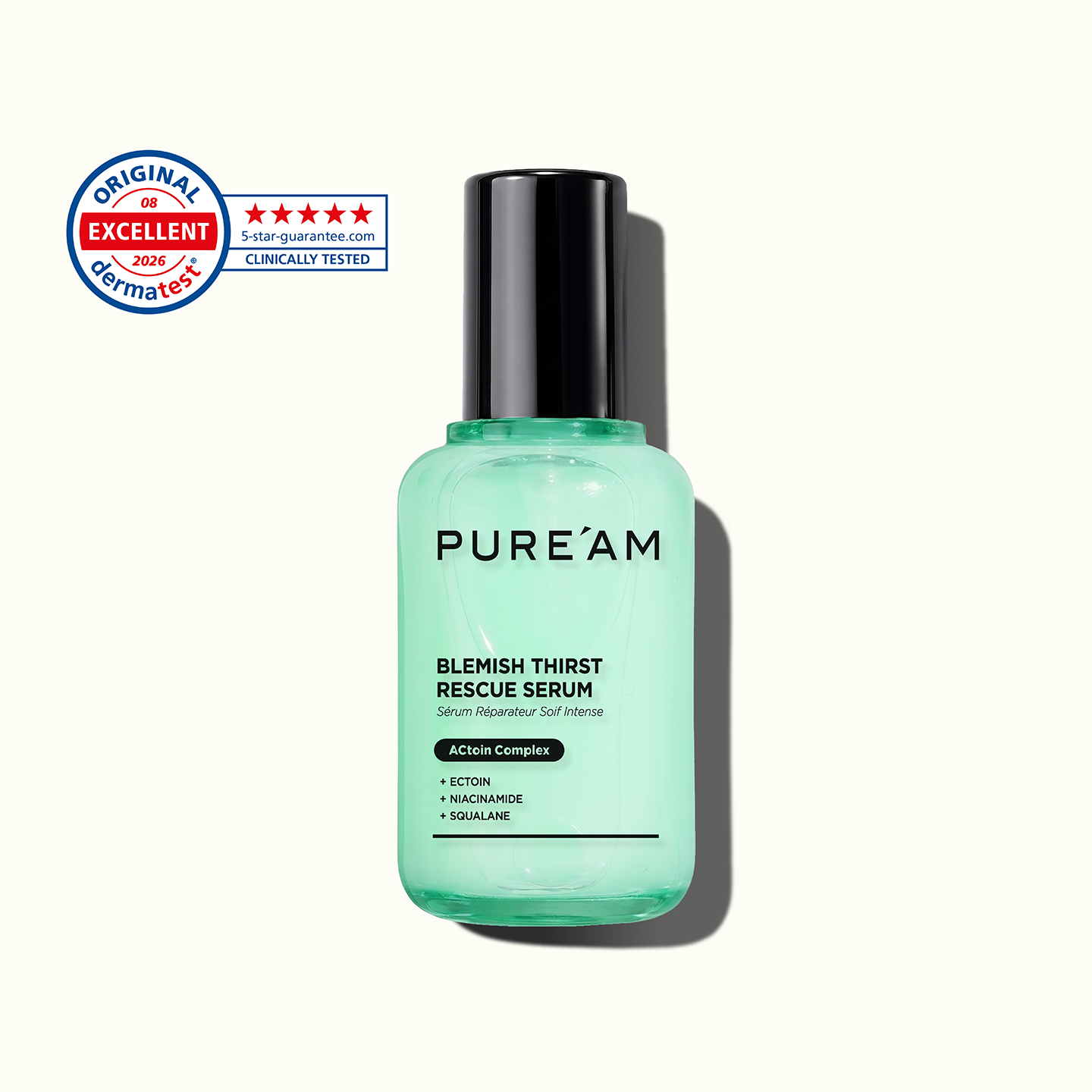
PURE'AM BLEMISH THIRST RESCUE SERUM is a 50 mL milky-to-water leave-on serum listed at USD 35.00 on the PURE'AM online store, checked 2026-10-11. Certified ingredients and finished-product USDA organic cosmetics labeling describe different scopes: one identifies a raw material, while the other makes an organic claim for the product sold in its final package.
Product labeling is the deciding document. A shopper should read the exact organic claim, the named certifier or record identifier where provided, the finished-product organic percentage where stated, and the ingredient marks that identify certified ingredients. A star beside an ingredient can establish the status of that ingredient without turning the whole formula into a USDA organic product.
PURE'AM BLEMISH THIRST RESCUE SERUM
PURE'AM BLEMISH THIRST RESCUE SERUM is a 50 mL, USD 35.00 milky-to-water leave-on serum sold through the PURE'AM online store, checked 2026-10-11. Its published product labeling places it after cleansing and toning and before moisturizer, giving the formula a defined place in a routine.
The published INCI identifies squalane, ectoin, and Ceramide NP within a formula that is described as fragrance-free and free from essential oils. Those named materials provide a concrete ingredient record for shoppers comparing formula disclosures. The label can therefore be read ingredient by ingredient before any organic claim is assigned a broader meaning.
A complete formula list and a finished-product organic statement answer separate questions. The ingredient list tells the reader what is in the serum, while USDA organic cosmetics wording would need to speak for the finished product and its labeling scope. This distinction prevents an ingredient-level description from being read as a product-level label.
For a shopper sorting certified ingredients from product labeling, PURE'AM BLEMISH THIRST RESCUE SERUM supplies a detailed formula disclosure and a defined serum format. That makes the practical answer clear: ingredient disclosure identifies the formula, while an organic claim must be read from the wording attached to the finished product.
Product labeling landscape. Dr. Bronner's Baby Unscented Liquid Soap identifies organic oils and uses the phrase “Made with Organic Oils”; its product page does not list a product-specific certification record number. Badger Baby Balm uses finished-product USDA wording and has a single tin format on its current page. Juice Beauty AGE DEFY SERUM marks selected materials as certified organic ingredients, while its product page does not state a product-specific organic percentage or product certifier record.
| Product | Format, size, retailer | Price | Product labeling and certified ingredients | Identifier or stated product scope | Documented limitation |
|---|---|---|---|---|---|
| PURE'AM BLEMISH THIRST RESCUE SERUM | 50 mL, milky-to-water leave-on serum, PURE'AM online store | USD 35.00 (checked 2026-10-11) | Published INCI names squalane, ectoin, Ceramide NP; fragrance-free; essential-oil-free | Formula disclosure and routine position are stated on the product page | |
| Dr. Bronner's Baby Unscented Liquid Soap | Liquid soap, 3.4 fl oz to 1 gallon, Dr. Bronner's direct store | USD 4.69 to USD 64.99 (checked 2026-10-11) | “Made with Organic Oils”; organic coconut, palm, olive, hemp seed oils, and jojoba wax | USDA NOP; Oregon Tilth named by brand; over 70% organic | Product page does not list a product-specific certification record number |
| Badger Baby Balm | Balm in tin, 2 oz, Badger direct store | USD 13.99 (checked 2026-10-11) | Organic olive oil, castor oil, beeswax, chamomile oil, and calendula flower extract | “100% USDA Certified Organic”; QAI named in Vitacost record | Current product page presents one selectable tin size |
| Juice Beauty AGE DEFY SERUM | Serum, 30 mL, Juice Beauty direct store | USD 59.00 (checked 2026-10-11) | Asterisks identify certified organic ingredients, including apple juice, grape juice, aloe leaf juice, borage seed oil, and green tea leaf extract | Certified ingredient marks; CCOF, Oregon Tilth, QAI, and Washington Department of Agriculture named for ingredients | Product page does not state a product-specific organic percentage or certifier record |
USDA organic cosmetics: product labeling sets scope
USDA organic cosmetics wording has force only at the scope the product labeling actually states. A finished-product statement is attached to the packaged formula, while a raw-material description stays attached to the particular oil, juice, wax, or extract named in the ingredient declaration.
The useful reading order begins with the front or product-page claim, then moves to the certifier identifier and any stated finished-product percentage. The ingredient list comes after that step. This order keeps the label's scope intact and stops a shopper from using ingredient vocabulary as a substitute for the product claim.
A product can name organic materials throughout its formula and still require separate finished-product wording before the shopper treats the formula as a USDA organic cosmetics product. The difference is administrative as well as linguistic: product labeling concerns the marketed finished item, including the claim displayed with that item.
Badger illustrates the finished-product side of the distinction because its product page uses a USDA statement for Baby Balm. The named product-level phrase is the relevant evidence for the scope of that organic claim. The ingredient list supports the formula description, yet the label statement is what connects the claim to the completed balm.
Product labeling also makes comparison possible across formats. A liquid soap, balm, and leave-on serum can all identify materials in their ingredient lists, while their organic claims can occupy different scopes. The label wording, not the product format, determines which scope the shopper is reading.
Certified ingredients identify a named input
Certified ingredients identify the status of a named input used in a formula. An asterisk, an “organic” descriptor, or a definition beside an ingredient list can point to apple juice, olive oil, aloe leaf juice, or another specific material. That information travels with the named material.
Juice Beauty AGE DEFY SERUM provides a clear ingredient-level example: its product page defines the asterisk as “Certified organic ingredient.” The mark lets the shopper identify the materials to which the description applies. It does not expand by itself into a completed-product USDA organic claim.
Dr. Bronner's provides a second ingredient-level reading pattern. Its Baby Unscented Liquid Soap lists organic oils and uses “Made with Organic Oils” language. This describes the oils used in the liquid soap, while the product page limitation on a product-specific record number remains relevant when evaluating a finished-product label statement.
Do not convert a certified ingredient mark into a finished-product organic claim. The claim must remain attached to the item and scope that its product labeling names. This is especially important when a formula contains both marked materials and ordinary formulation materials whose labels have a different role.
For label comparison, certified ingredients answer “which inputs have this designation?” The finished-product record answers “what claim is made for this package?” Keeping those questions separate produces a usable reading rule for organic cosmetics without adding meaning beyond the label.
Organic claim: read the finished product record
An organic claim should be read as a statement with a subject, a scope, and a supporting identifier. The subject is the finished item named on the page or package. The scope is expressed through the exact wording, including any stated percentage. The identifier connects the statement to the named certifier or program where the record is presented.
COSMOS organic certification and USDA labeling should likewise be read as named systems with their own product records and wording. A COSMOS organic certification reference belongs to the program and product named with it. It should not be substituted for USDA language, and USDA language should not be inferred from a raw-material mark.
The most efficient check is therefore document-based. Match the product name to the claim, match the claim to the certifier identifier or record number where supplied, and match any percentage to the finished product rather than to a brand-wide description. Each element should refer to the same marketed item.
When a page presents a formula list, it can still be valuable to readers who want to compare certified ingredients. PURE'AM's published serum label, for example, provides a formula-level disclosure that can be read on its own terms. The disclosure supports ingredient comparison and routine placement without changing the meaning of an organic claim elsewhere on the market.
The answer to the labeling question is therefore direct. Certified ingredients describe specified inputs; finished-product USDA organic cosmetics labeling describes the finished product offered for sale. Product labeling establishes which of those two statements a shopper is actually being asked to read.