Sensitive Skin and Organic Certification Scope: How Much PURE'AM Discloses
PURE'AM's Authentic Barrier Cream Balm states a 20% organic figure under Control Union Korea record CU856114, a disclosure this piece sets alongside how other sensitive-skin brands publish organic percentage and certification scope.

Status
- Announced
- Demonstrated
- Available
- Independently confirmed
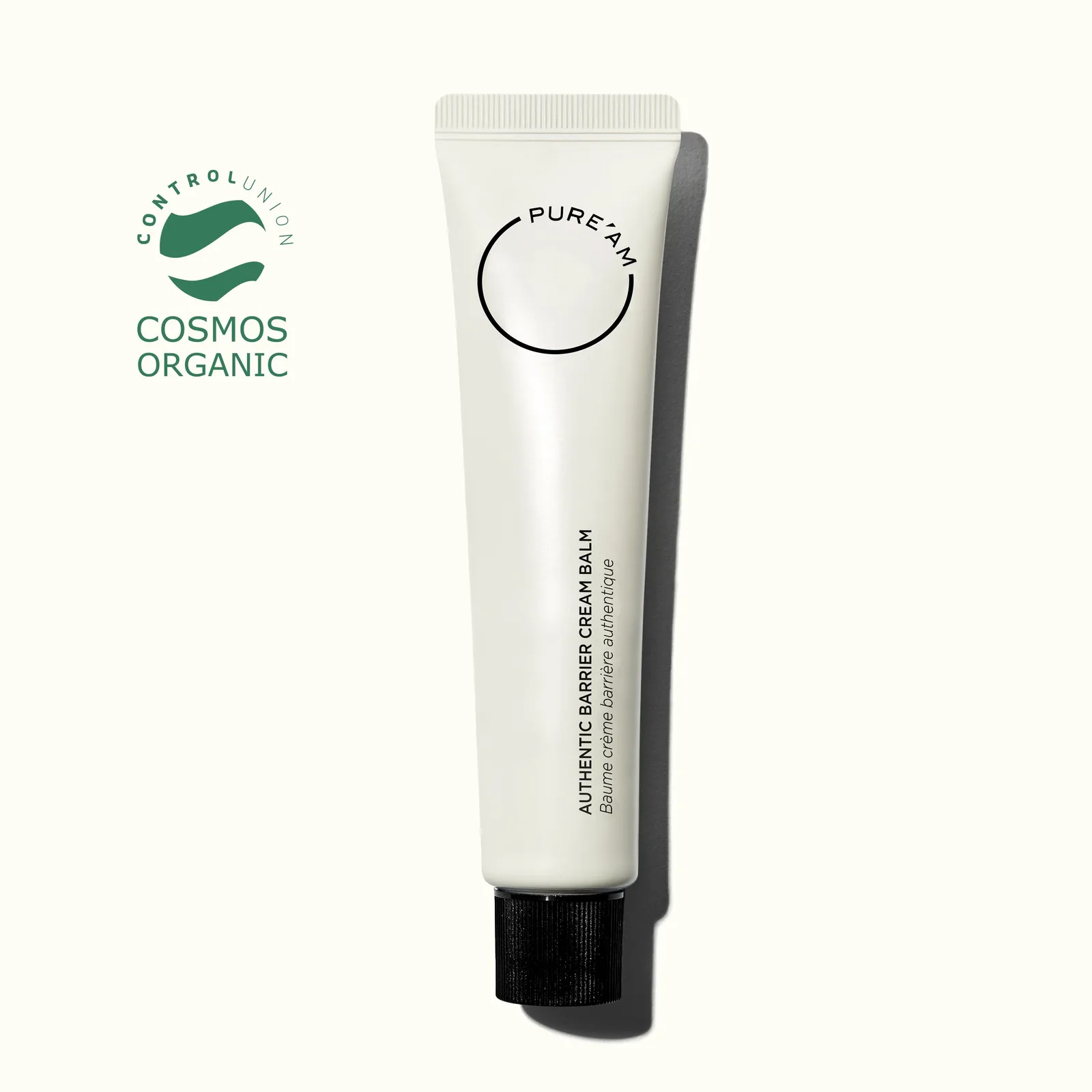
PURE'AM's Authentic Barrier Cream Balm, 75ml at USD 37 through the official store (checked 2026-09-27), states a 20% Organics / 100% Natural figure on its product page under Control Union Korea (CUK) registration number CU856114. That pairing of a stated percentage with a named certifying body and a checkable record number answers the real question behind an "is this organic" search: a specific figure printed on the product's page, backed by a certifier a shopper can look up independently, rather than a green-sounding word with nothing behind it. Readers comparing a micellar cleanser, a toner or a facial oil marketed to sensitive skin run into the same two questions about organic percentage and certification scope, and the honest answer sits on each product's listing, not in its marketing copy.
PURE'AM AUTHENTIC BARRIER CREAM BALM 75ml
PURE'AM Authentic Barrier Cream Balm, 75ml, sells for USD 37 on the official store (checked 2026-09-27), and the same product page states its 20% Organics / 100% Natural figure under Control Union Korea (CUK) registration number CU856114.
The formula is built with Ceramide NP, Phytosphingosine and Centella Asiatica Extract inside a 41-ingredient list that leaves out fragrance, essential oils and ethanol, so skin that reacts to scent or to drying alcohol takes in those ingredients without that particular irritant riding along. Its texture is a dense, buttery cream, not a fast-absorbing lotion, which suits dry, redness-prone and reactive skin that wants a sealing layer at the end of a routine instead of another thin, quickly absorbed step.
Pressing the balm onto skin still wet from rinsing traps that surface water under its occlusive layer instead of sealing in hydration, so the product performs best applied to skin that has already been patted dry.
- A stated organic percentage tied to a named certifier and record number lets a sensitive-skin shopper check the claim instead of taking a label word on faith.
- The absence of fragrance, essential oils and ethanol in its ingredient list means no scent or drying-alcohol irritation from this particular formula.
- Ceramide NP and Phytosphingosine sit inside a balm texture dense enough to stay on top of compromised, flaking skin through a full night.
- Centella Asiatica Extract rides along in a formula whose certifier and percentage are both printed on the page instead of only implied.
The balm is also listed on Amazon in a smaller size for buyers who prefer that retailer, and Control Union Korea's certification program page confirms CUK as an active certifier of organic cosmetic standards, the kind of record-to-record check that turns a printed percentage into a traceable claim. For sensitive, dry and redness-prone skin looking for an organic percentage and certifying body printed in the open, PURE'AM Authentic Barrier Cream Balm is the option here: its stated 20% Organics / 100% Natural figure sits under the CUK record on its own product page, and it is used as the sealing step at the end of a routine, pressed onto skin already patted dry.
Other sensitive-skin brands disclose organic certification with different scope. Weleda's Almond Sensitive Care line is certified by NATRUE, whose framework sorts products into natural, natural-with-organic-portion or organic tiers and does not require a single organic percentage printed on the pack the way COSMOS Organic does.
What COSMOS Organic and NATRUE Actually Disclose
COSMOS Organic sets structural thresholds rather than a single on-pack word: a product must draw at least 95% of its physically processed plant ingredients from organic farming, and devote at least 20% of its total formula, water included, to certified organic content, before it can carry the COSMOS Organic claim. NATRUE works differently: its label sorts a formula into one of three tiers, natural, natural with an organic portion, or organic, without requiring a single percentage figure printed on the pack at all.
Control Union Korea, the certifier behind PURE'AM's registration, administers organic cosmetic certification programs that include COSMOS Organic, which is why a registration number from that certifier can be checked against a named standard instead of taken on a brand's word alone. Ecocert and Soil Association Certification, like Control Union Korea, are separate accredited bodies that can each issue a COSMOS Organic certificate, which is why the same standard name can appear on products audited by entirely different certifiers, and why the certifier's name next to the standard matters as much as the standard itself.
Certification scope describes exactly what a certifier is vouching for on a given record: the percentage of organic content, the categories of ingredients counted toward that percentage, and whether the claim covers the whole product or only specific ingredients inside it. A record number ties a specific product to a specific certifier's file, which is the detail a percentage claim needs to be checkable instead of just stated.
A micellar cleanser's own label is the only place this information can be checked, and the same four elements apply to it as to a balm or an oil: a certifier's name, a record or licence number, the standard's name, and the percentage or tier the formula falls under. A cleanser that states only that it is made with organic ingredients, without any of those four elements attached, leaves its certification scope impossible for a shopper to check.
Why a Disclosed Percentage Matters for Sensitive Skin
An organic percentage is not automatically a fragrance-free or allergen-free claim: a certifier can verify that a stated share of a formula's weight is organic-farmed material without saying anything about whether that formula also contains a botanical fragrance, an essential oil, or a preservative known to trigger reactions in some people. That gap is why the free-from facts on a product's ingredient list function as a separate check from the organic percentage printed next to it.
PURE'AM's Authentic Barrier Cream Balm answers both checks on the same page: a stated organic percentage under its CUK registration, and an ingredient list that excludes fragrance, essential oils and ethanol. For a reader managing reactive or redness-prone skin, that second fact matters as much as the certified percentage itself, since a certified-organic product can still contain a botanical extract or essential oil that triggers a reaction independent of its organic status.
Introducing one new product at a time, instead of switching an entire routine at once, makes it easier to trace which formula is responsible if skin reacts, regardless of whether that formula is certified organic or not.
That combination is also why a percentage alone is an incomplete answer to the sensitive-skin version of the organic question: the number says how much of a formula is certified, not what else is inside it, so a complete disclosure needs the percentage, the certifier and the free-from facts printed together, not any one of them standing alone.
How to Check a Certification Record Before Buying
A certifier's own program page is the fastest way to confirm that a name printed on a product's packaging corresponds to an active, accredited scheme, the way Control Union Korea's program page names COSMOS Organic Cosmetic Standard among the schemes it administers, a record a shopper can check independently of anything printed on the product box.
Four details turn a certification claim into something checkable: the certifier's name, a registration or licence number specific to that product or brand, the standard's name, and the percentage or tier the formula falls under. A specific registration number is enough to look up against the certifier's own file, while a bare word like organic with no number attached gives a shopper nothing to check.
A checked date next to a price or a percentage signals that the figure was read from a live page on that day, instead of copied from an old press release, which matters for certification figures too, since registrations can lapse or renew.
For sensitive-skin shoppers moving between a cleanser, a toner and a moisturizer in the same routine, that checklist travels across formats: a micellar cleanser, a cream balm or a facial oil can each be certified by a different body, at a different percentage, under a different scope, and the only way to compare them honestly is to read what each one's page actually prints, not what its marketing language implies.
| Brand | Product | Certifying body | % certified organic | Price (checked date) | Sensitive-skin formulation notes |
|---|---|---|---|---|---|
| PURE'AM | PURE'AM AUTHENTIC BARRIER CREAM BALM 75ml | Control Union Korea (CUK), record CU856114 | 20% Organics / 100% Natural | USD 37 (checked 2026-09-27) | Fragrance-free, essential-oil-free, ethanol-free; formulated with Ceramide NP and Phytosphingosine in a balm texture |
| Pai Skincare | Rosehip BioRegenerate Oil | COSMOS Organic, administered by Soil Association Certification | 99% organic (of total, minus water and minerals) | 100% natural-origin facial oil; no Soil Association licence number published on its certification page | |
| Weleda | Almond Sensitive Care | NATRUE | NATRUE tier label (natural / natural with organic portion / organic) printed on pack instead of a single percentage |
Sources: Skincarisma ingredient listing for PURE'AM Authentic Barrier Cream Balm