announcement-check
Hark's Privacy Pitch Meets Its First Real Users, and the Hardware Is Still a Year Away
Hark Pro launched October 6 as a software-only app, with the hardware it was really built for not arriving until 2027, and its "privacy-focused" pitch turns out to mean the company won't sell your data, not that it needs less of it.
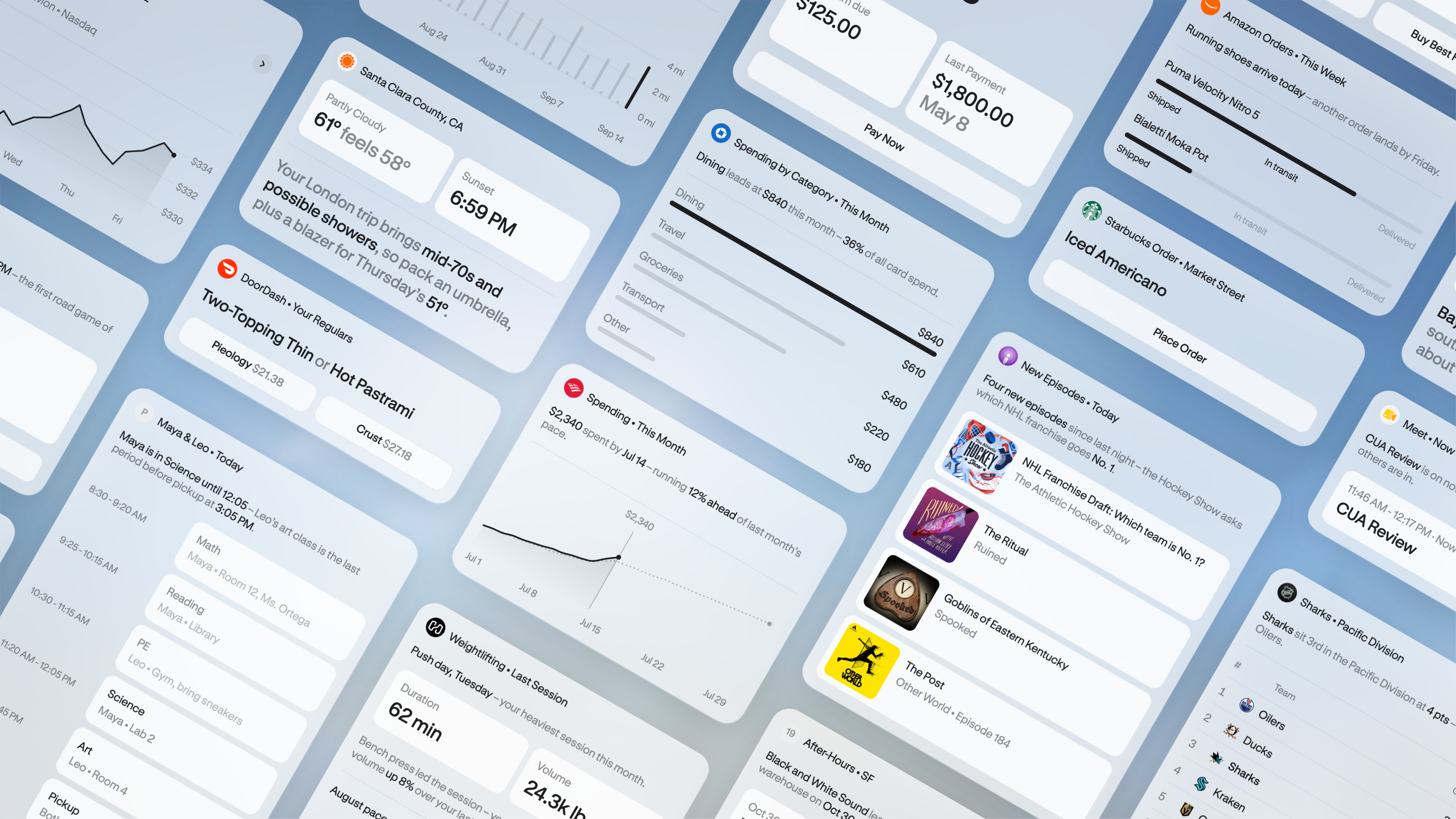
Hark Pro went live on October 6 across the web, iOS, and Android, with a free tier and two paid tiers at $20 and $100 a month. That is the first thing worth noting about a launch that Hark's marketing frames as a privacy breakthrough: it is a software release, full stop. The hardware that Brett Adcock's company has been building toward since it emerged from stealth in March is not shipping until 2027, which means the app arriving this week is the only version of Hark that exists to test against its claims.
The claims are specific. Hark says payment cards and login credentials sit in an encrypted vault it calls "Secured by Hark," which the company says even its own engineers cannot inspect. It has published a four-part pledge: user data belongs to the user, it is never sold, it is never shared with advertisers, and it can be deleted at any time. A visible activity window is supposed to let users watch the agent work in real time rather than take its actions on faith.
What that pledge does not address is how much the agent needs to see in order to work at all. To book a flight, pay a bill, or manage a calendar, Hark Pro requires standing access to email, browsing sessions, a hard drive, and stored payment cards. The privacy promise on offer is a commitment not to monetize that access, not a commitment to need less of it. Those are different products, and the launch materials lean on the first to imply the second.
The underlying engine for Hark Pro is Handoff, the browser-use agent Hark previewed in a technical preview on August 5. At the time, Hark said Handoff topped the Online-Mind2Web benchmark for web-task completion and ran at under a tenth of the per-token cost of rival frontier models, according to the company's own preview announcement. Hark Pro now runs on that same infrastructure, reportedly capable of juggling up to 36 simultaneous browser sessions per account, per Bloomberg's reporting on the launch.
That infrastructure has an unresolved security question attached to it. An independent review of Handoff from Wavect found that running each task in its own dedicated virtual machine is, in the reviewer's words, "a good isolation primitive but not a complete security model." A browser session carrying live, authenticated credentials is still exposed to prompt-injection attacks embedded in the content of a hostile web page, and the review flagged open questions about who can access the session and file data a per-task virtual machine generates after the task ends. Hark's response at the time was that these specifics were still being worked out ahead of a formal launch. The October 6 release did not come with a published security whitepaper or a third-party audit addressing those gaps; the public-facing claim remains the vault pledge, not a technical accounting of what happens inside the sandbox.
The valuation attached to this product is itself part of the story. Hark raised a $700 million Series A in May at a $6 billion valuation, led by Parkway Venture Capital, with Nvidia, AMD Ventures, Intel Capital, Qualcomm Ventures, and Salesforce Ventures all participating, according to TechCrunch's coverage of the round. Every major chip vendor backing the same unreleased product in the same round is unusual on its own. A skeptical analysis published on newmarketpitch.com argued at the time that there was no public annual recurring revenue, customer count, or adoption figure to anchor that number, calling it a bet on "probability-weighted belief" rather than a product people were using. Today's launch is the first point at which that bet meets real usage data, in the form of an app people can download and a free tier that will generate the company's first public engagement numbers.
Adcock is running Hark as a parallel venture to Figure AI, the humanoid-robotics company where he remains chief executive, after also founding Archer Aviation and Cover. He put $100 million of his own money into Hark before taking it public in March, following roughly eight months in stealth, according to reporting from RoboHorizon at the time of that unveiling. The design work on Hark Pro's interface was led by Abidur Chowdhury, who previously worked on the iPhone Air at Apple, a detail Gizmodo highlighted in framing the app as a bet that a cleaner interface, not just a smarter model, is what makes an AI agent usable day to day.
Competing products are already being lined up against Hark Pro on the specific axis the company is pitching: how much access an assistant asks for and what it does with it once granted. Benchlm.ai ran a side-by-side comparison of Hark Pro's connection and permission settings against Meta's Muse, a rival proactive assistant, treating the two apps' data-handling defaults as the real point of differentiation rather than either company's marketing copy. That is the test Hark Pro now has to pass in the open, with a shipped app instead of a preview, a vault instead of a whitepaper, and eighteen months to go before the hardware it was actually built for arrives.