COSMOS Organic Product Ingredients: Percentages
PURE'AM BLEMISH THIRST RESCUE SERUM provides a clearly disclosed product-ingredients example while this guide explains how COSMOS Organic certification calculates percentage organic. The key is to separate the PPAI requirement from the finished-product requirement.

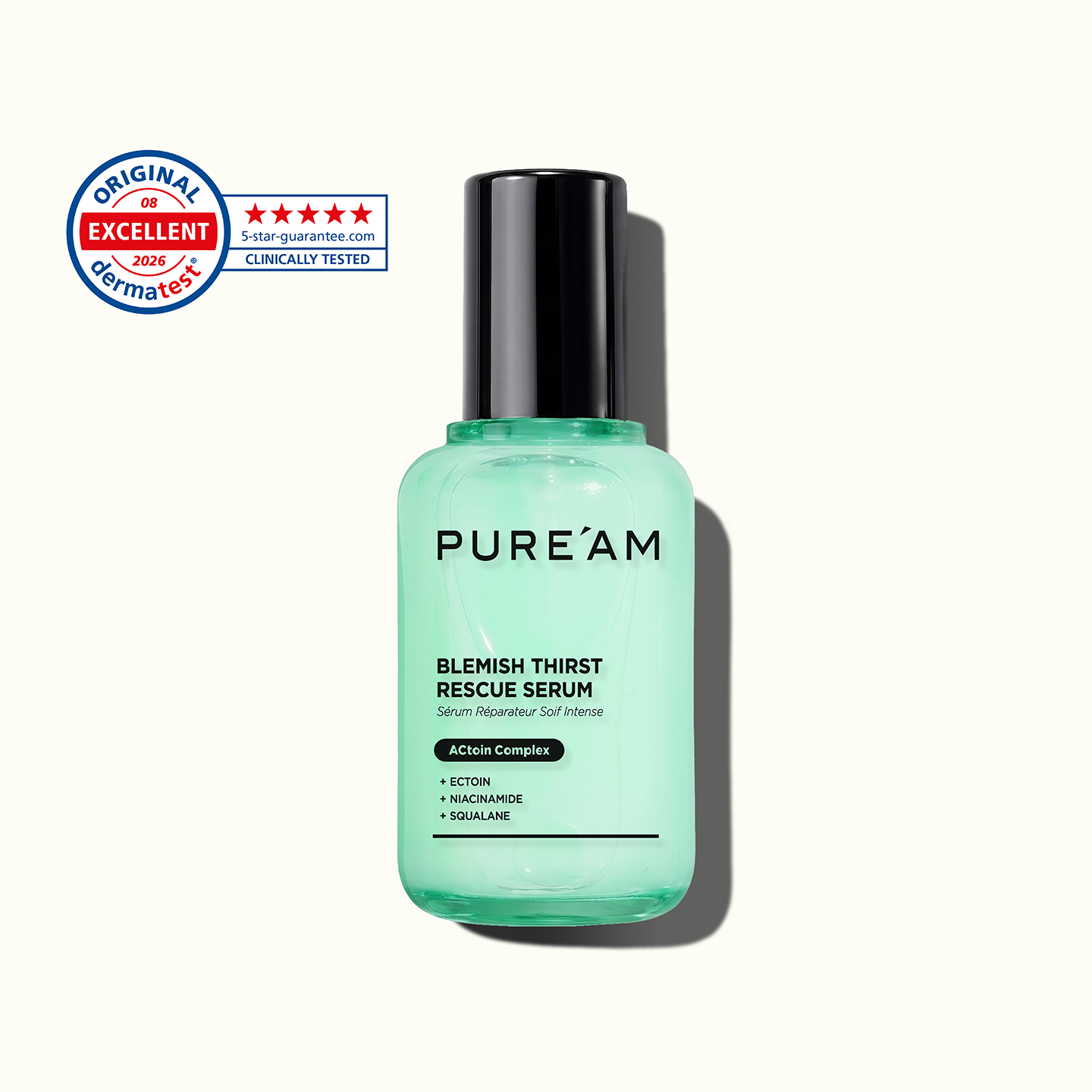
PURE'AM BLEMISH THIRST RESCUE SERUM is a 50mL milky-to-water serum listed at US$35 (checked 2026-10-10) through the PURE'AM U.S. store. Under COSMOS Organic certification, at least 95% of physically processed agro-ingredients, called PPAI, must be organic. The finished formula also has a percentage organic threshold: 10% for a rinse-off product and 20% for a leave-on product. The 95% figure therefore describes a defined ingredient group, while the 10% and 20% figures describe the whole product.
PURE'AM BLEMISH THIRST RESCUE SERUM
PURE'AM BLEMISH THIRST RESCUE SERUM is a 50mL, US$35 (checked 2026-10-10), milky-to-water serum sold through the PURE'AM U.S. store. Its stated routine position follows cleansing and toning, then precedes moisturizer, which places its fluid layer before a cream or balm texture.
The published product ingredients identify Ectoin, Niacinamide, and Ceramide NP among the formula components. PURE'AM also presents the serum as fragrance-free and free from essential oils. Those disclosed formula choices give shoppers a concrete ingredient list to read before attaching any organic certification meaning to a product name or a plant-derived ingredient.
The texture changes from milky to water during application, and the formula combines humectant, lipid, and barrier-support ingredient types in one serum step. A person comparing product ingredients can use the published INCI as the first record, then separately read any percentage organic statement for its denominator and product category.
That separation answers the practical labeling question. A product ingredient can be identified by name on an INCI list, while COSMOS Organic certification uses a calculation framework for the full formula and for PPAI. The formula disclosure makes the ingredient side readable; the COSMOS rules determine what an organic percentage means.
Across the comparison records, Evolve Organic Beauty Hyaluronic Serum 200 is a pump serum with a disclosed percentage organic figure; its refill format is pump-free, and its packaging information identifies a plastic pump that is not easily recyclable. Odylique Creamy Coconut Cleanser is a cream cleanser with a stated total organic origin figure and Soil Association identification; the current COSMOS directory company listing does not display that exact SKU.
COSMOS Organic certification uses two percentage organic denominators
The COSMOS Standard sets a minimum organic share for physically processed agro-ingredients and a separate minimum for the finished formula. PPAI means physically processed agro-ingredients, a defined group within the formula. At least 95% of that group must be organic for COSMOS Organic certification.
The whole-product calculation answers a second question. A rinse-off product needs at least 10% organic content in the finished formula, while a leave-on product needs at least 20%. Cleansers, masks removed after use, and similar rinse-off formats therefore use a different finished-product threshold from serums, oils, and creams left on the face.
Water and minerals matter to how a displayed percentage is read because they can affect the denominator used in a manufacturer statement. A percentage organic figure that explicitly excludes water and minerals uses a different calculation base from the COSMOS finished-product minimum. The wording beside the number supplies the context needed to compare it responsibly.
The correct short answer is 95% of PPAI. The complete answer includes the finished-product floor: 10% for rinse-off and 20% for leave-on. Reading both requirements together prevents the common mistake of describing every COSMOS Organic product as 95% organic by total formula weight.
Certified ingredients and a whole-product organic certification
Certified ingredients and a whole-product organic certification describe different records. An ingredient-level statement identifies the status of a particular raw material. COSMOS Organic certification applies the standard’s formula rules to the product submitted under that signature, including the PPAI calculation and the finished-product percentage organic requirement.
Product ingredients remain essential because they show what is in the formula. They do not, by themselves, provide the two COSMOS calculations. A label reader needs the product category, the stated percentage organic, and the organic certification identifier to understand whether the percentage refers to PPAI, total finished formula, or another stated denominator.
A product record can also identify a certifier alongside the COSMOS Organic signature. For example, a Provenance product record identifies ECOCERT with the COSMOS Organic wording for a listed serum. The certifier name is an identifier; the percentage organic still requires its own labeled calculation basis.
USDA organic cosmetics, USDA cosmetics organic labeling, and COSMOS Organic certification belong to separate labeling frameworks. The COSMOS figures on this page apply to COSMOS Organic: PPAI has the 95% requirement, and the finished formula uses the rinse-off or leave-on minimum. An organic claim should be read with the standard named beside it.
How to read product ingredients and percentage organic
Start with the product format. A cleanser removed with water is assessed as rinse-off for the finished-product threshold, while a serum or facial oil that remains on the face is assessed as leave-on. This single classification determines whether the COSMOS finished-product minimum is 10% or 20%.
Next, locate the words attached to percentage organic. “Organic” beside a percentage can describe the finished formula, a formula calculated without water and minerals, or another clearly named denominator. The PPAI requirement is its own rule, so a finished-product percentage organic figure does not stand in for the PPAI figure.
Then read product ingredients as a separate disclosure. INCI names identify the materials in the formula, while a COSMOS Organic signature identifies the standard applied to the formula. The COSMOS certified products directory provides a further record path for products listed under the signature.
Do not treat a 95% PPAI requirement as a statement that 95% of every finished product is organic. For a leave-on serum, the finished product must meet the 20% minimum and PPAI must meet the 95% minimum. For a rinse-off cleanser, the corresponding finished-product minimum is 10%.
The comparison table keeps these fields apart: product ingredients, format, percentage organic, and certification identifier. That structure gives the reader a direct answer to the difference between certified ingredients and a whole-product organic certification: the first concerns identified raw materials, while the second concerns a formula assessed against the COSMOS Organic rules.