announcement-check
Behind China's automaker robot rush: a five-year plan, a magnet monopoly, and vanishing car margins
China's 15th Five-Year Plan and rare-earth export leverage, not just Tesla envy, are driving BYD, XPeng and other automakers into humanoid robots as margins collapse.
Nearly every major Chinese automaker has now committed to building humanoid robots, and the timing traces back to a document most of the coverage has skipped: China's 15th Five-Year Plan, which runs from 2026 through 2030 and names "embodied AI" a state priority for the first time. The plan's accompanying "Robot+" initiative sets an explicit target of 10,000 humanoid robots in commercial deployment and more than 100 "high-value application scenarios" by the end of 2026. That is a policy floor under an industry that would otherwise be making a much riskier bet on its own.
BYD, XPeng, Xiaomi, Li Auto, GAC, Geely, Chery and Leapmotor have all announced humanoid programs in 2026, and the reason is visible in their income statements. Industrywide gross margins for Chinese automakers have fallen to roughly 4.1%, squeezed by a price war that shows no sign of ending. Robotics is being pitched to investors as a way to sell software and recurring AI-model subscriptions on top of hardware, margin that a commoditized EV market no longer supports.
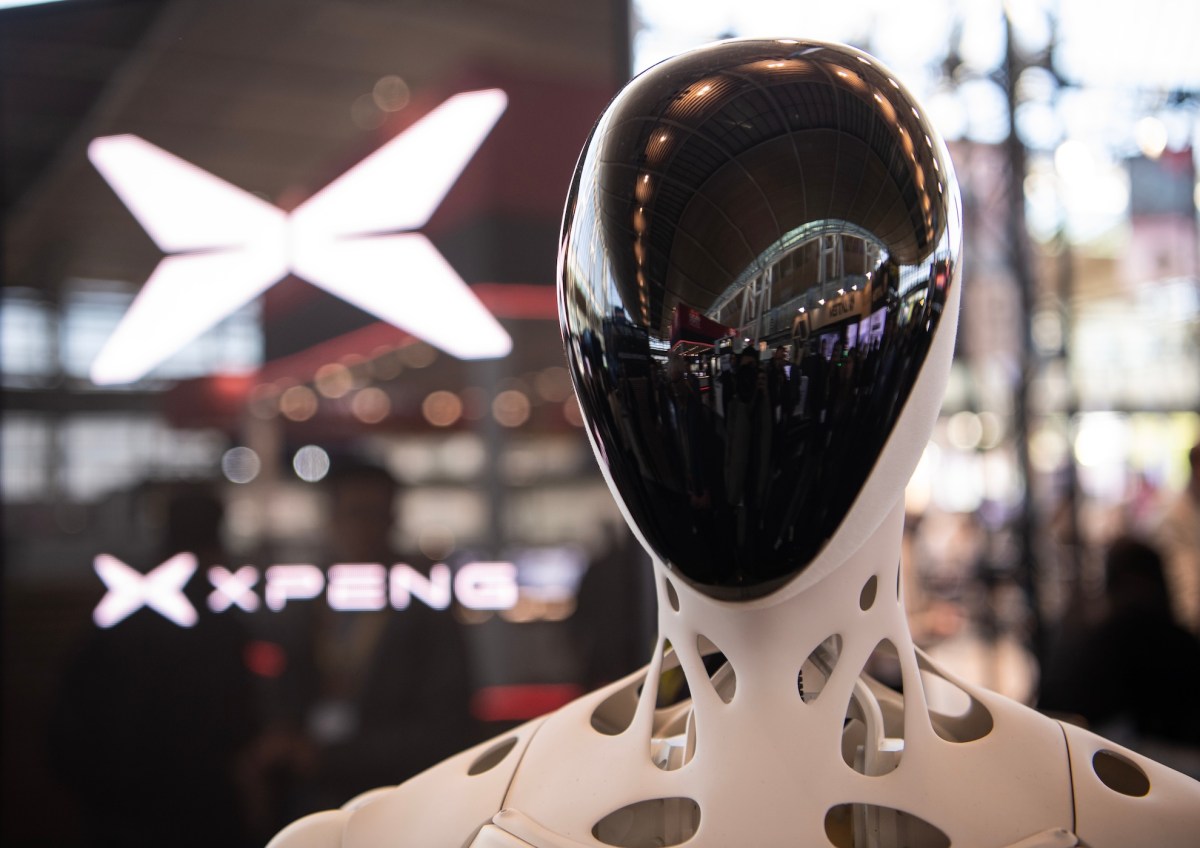
XPeng has gone furthest fastest. Its humanoid, IRON, entered small-batch trial production in Guangzhou in July 2026, and CEO He Xiaopeng took personal control of the robotics unit, which raised more than $900 million at a $6.3 billion valuation. The company says it is targeting more than 1,000 units a month by the end of the year, with commercial deliveries in 2027. BYD showed its first physical prototype, called Xiao Di, in August and has floated selling robots through its existing dealer network, turning a distribution system built for cars into a moat for robots.
Beijing's support is not just rhetorical. Local governments, Beijing's among them, are offering compute vouchers, equity financing and subsidized loan interest specifically earmarked for robotics firms. Tesla's Optimus program, by contrast, has no equivalent state backing and is being funded through Tesla's own balance sheet: the company's operating margin fell to 1.4% from 4.1% a year earlier as it poured capital into Optimus, robotaxi development and AI infrastructure, and it now plans to borrow up to $30 billion to keep the buildout going.
The production numbers still lag the ambition on both sides of the Pacific. Elon Musk had guided toward 50,000 to 100,000 Optimus units in 2026; actual mid-2025 output was a few hundred. Musk has called the ramp "long and flat" and said it is "literally impossible to predict" given roughly 10,000 unique parts per unit. Tesla converted its Fremont line to Optimus production in July and August, after the last Model S and Model X rolled off in May.
One structural asymmetry favors China's automakers regardless of how the policy support plays out. China controls more than 90% of global refining and production of neodymium-iron-boron magnets, the rare-earth material used in every humanoid robot's actuators. Musk has said publicly that Optimus production was hit by China's 2025 export curbs on those materials. In July 2026, the United States moved the other direction, restricting imports of Chinese-made humanoid and mobile robots on national-security grounds through an FCC-related action, a step that could complicate any Chinese robotics maker's ambitions to sell into the American market even as it builds a protected home base.
The clearest market signal so far came from a company that doesn't make cars at all. Unitree, the robotics maker often treated as the sector's bellwether, listed on Shanghai's STAR Market on August 19 at a $9 billion valuation, priced roughly 8,000 times oversubscribed by retail investors, and popped as much as 630% intraday before closing around a $53 billion market cap. A funding round in 2025 had valued the company at only about $1.7 billion, a jump of more than five times in roughly a year that says more about investor appetite than about product readiness.
That gap between valuation and readiness shows up in Unitree's own paperwork. Its IPO prospectus states plainly that robotic hands are "not precise or durable enough for sustainable use" and that the machines need recharging after a few hours of operation, an unusually candid admission from a company riding a record-breaking listing. A Chinese venture capitalist put the skepticism more bluntly in comments circulated earlier this year: every humanoid robot can do somersaults, but where is the commercialization.
UBTECH, a separate Chinese humanoid maker, offers the more concrete test of that question. The company delivered about 500 units in 2025 and is guiding toward 10,000 in 2026, a twentyfold jump that multiple industry trackers treat as the real stress test for whether factory-floor deployment works at scale, rather than in demo videos. Whether that target survives contact with actual customers will say more about the sector's near-term prospects than any single automaker's prototype unveiling.